
MPH Alumna Transforms Solano EMS
Work to Implement Emergency Medical Dispatch Training Helps to Strengthen Chain of Survival
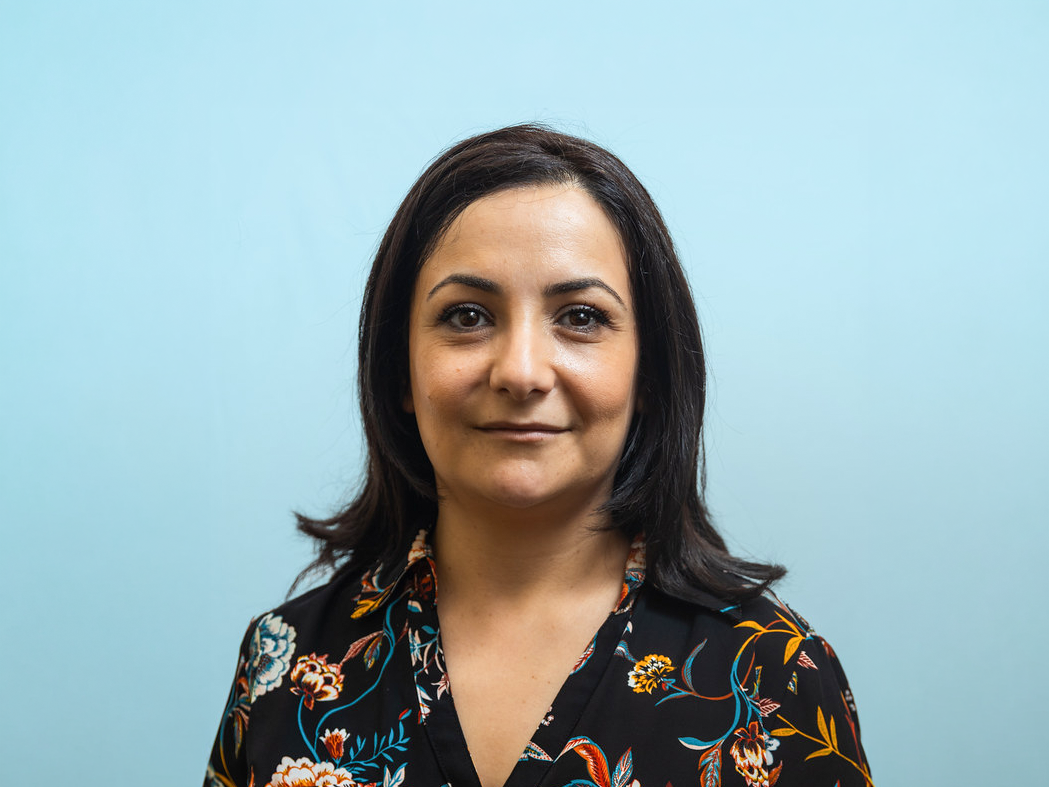
When a cardiac arrest emergency occurs, the clock starts the moment the heart stops. For Adelin Ansari, Class of 2021 Graduate of the Touro University California Master of Public Health (MPH) program, the most critical link begins with the voice on the other end of a 911 call.
Ansari, a Health Education Specialist with Solano County Family Health Services, has dedicated her recent professional efforts to a life-saving initiative: implementing Emergency Medical Dispatch (EMD) training for dispatchers across Solano County.
By standardizing pre-arrival instructions, she is ensuring that no matter where a resident calls from, they receive the immediate, high-quality guidance necessary to keep a patient alive until paramedics reach the scene.
The inspiration for the project came from a deep dive into local emergency data. While Solano County boasts a robust EMS response, Ansari identified a significant inconsistency in how pre-arrival instructions, particularly dispatcher-assisted CPR, were delivered across different jurisdictions.
The focus on EMD training came from recognizing a gap in the chain of survival, Ansari says. Strengthening dispatcher training could significantly improve early intervention, which is critical in cardiac arrest outcomes.
By removing inconsistencies in pre-arrival instructions, the initiative aims to decrease the time it takes for vital information to reach bystanders, allowing for faster chest compressions and better stabilization in cases of cardiac arrest, choking, severe bleeding, and overdose before an ambulance can arrive on-scene.
The TUC Foundations
The ability to look at a complex emergency system and identify a specific point for improvement is a skill Ansari credits to her time at Touro University California (TUC). Her Public Health classes and training provided the framework to view emergency response as a population health challenge.
“My MPH training emphasized population health, data-driven decision-making, and systems-level thinking,” Ansari explains. “This helped me look beyond individual incidents and identify patterns. It also helped me understand how early interventions like dispatcher-assisted CPR fit into the broader public health framework.”
Navigating the Solano EMS landscape required the data analysis and program evaluation skills she honed at TUC. These tools allowed her to interpret EMS data, identify trends, and translate those findings into actionable recommendations for fire agencies, dispatch centers, and city leadership.
“It’s been exciting to watch Adelin take what she learned in our MPH program and turn it into meaningful action in the community,” said Dr. Gayle Cummings, Assistant Dean, College of Health Sciences and Program Director of the Public Health Program. “Her work to strengthen emergency response in Solano County demonstrates the kind of leadership, collaboration, and problem-solving we hope to inspire in our students. We are incredibly proud of what she has accomplished and the impact she is making.”
Overcoming Barriers to 2027
The road to standardization has its challenges. Transitioning to a structured EMD system involves navigating staffing constraints, training time limitations, and the integration of new protocols into existing workflows.
Ansari views the upcoming Jan. 1, 2027, statewide mandate for EMD implementation as a vital tool to overcome these hurdles.
“While many agencies recognize the value of EMD, competing priorities can delay implementation,” Ansari notes. “Having a statewide deadline creates accountability and helps align efforts across jurisdictions.”
As the deadline approaches, success is being measured by more than just meeting a date. Ansari and her partners are tracking process-oriented metrics, such as the time to the first chest compression and the rate of return of spontaneous circulation (ROSC) in patients.
Private providers like Vallejo’s Medic Ambulance were early adopters, having completed their own internal EMD training years prior. Because they managed their implementation independently, they served as a model of success while the county’s efforts remained focused on broader system-level coordination with public safety partners and dispatch stakeholders.
The ‘First’, First Responders
One of the most impactful shifts in this project is the way dispatchers are perceived by the public and city officials. Ansari often frames dispatchers as the “first”, first responders, highlighting their role in saving lives long before a siren is even heard.
While the work is often invisible to the public, the feedback from the dispatchers themselves has been positive. Many have expressed that having structured, guided protocols helps them manage the high-stress environment of a life-or-death call.
For current TUC students looking to make a similar impact, Ansari offers simple but profound advice: Focus on the people as much as the data.
“Implementation work is not just about people, systems, and collaboration,” Adelin says. “Staying patient and flexible is important, as meaningful change in complex systems takes time.”
Through her work in Solano County, Ansari is proving that in public health, the right words at the right time can be a lifeline.