Mastery in Motion
Pharmacy Education Enters a New Era at Touro University California
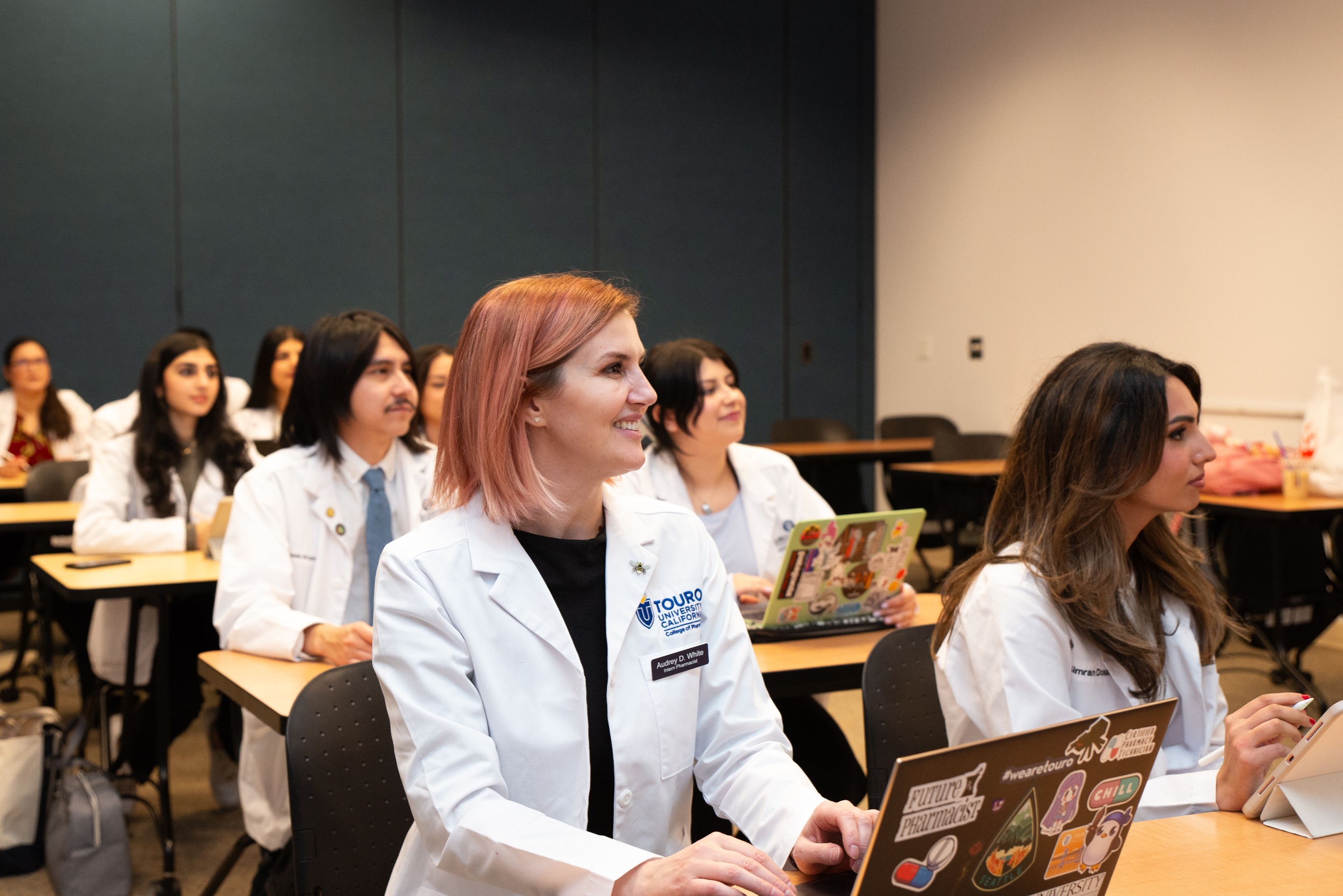
When Touro University California College of Pharmacy launched its accelerated three-year PharmD curriculum in 2023, it marked more than just a calendar change. It marked a bold shift in how future pharmacists are trained.
At the heart of the redesign is mastery learning, an approach that emphasizes genuine understanding and competence over simply “getting through” exams. Instead of asking, “Did you pass?”, the new model asks, “Did you truly learn it, and can you apply it?”
As one student put it “The focus is on actually achieving competency rather than just passing an exam. That keeps me motivated to keep improving.”
What Mastery Learning Means at Touro
Mastery learning creates a structured, flexible environment where every student has the opportunity to succeed. The process typically follows a cycle:
- Learning new skills and concepts
- Practicing through formative assessments and feedback
- Making corrections and relearning when needed
- Reassessing until mastery is achieved
Faculty design their courses with clear goals, transparent expectations, and assessments that align with professional competencies. This clarity reduces stress while giving students confidence about where to focus their energy.
One faculty member shared, “There’s greater accountability. Expectations are well-known, and students are clearer on what they should spend time studying.”
Learning by Doing
Hands-on, low-stakes practice is central to the new program. In Touro’s core course series, students tackle problem sets, case studies, SOAP notes, pharmacy simulations, and even gamified assignments. One of the most popular tools has been the two-step quiz. Students first take a quiz on their own, then immediately retake it as a group. Both scores are recorded, and both offer valuable feedback.
“Group quizzes helped me move beyond memorization,” said one student. “You learn from each other, and those discussions help the information stick.”
Faculty agree “Formative assignments give students a chance to practice, reflect, and improve through feedback. They also help us spot where students struggle and adjust our teaching.”
Feedback That Fuels Growth
In mastery learning, feedback isn’t just an afterthought—it’s the engine that drives progress. Using platforms like Canvas, ExamSoft, Core, and Enflux, students receive personalized progress reports that pinpoint strengths and opportunities.
For example, ExamSoft’s Strength and Opportunity (SO) Report breaks down performance by learning objective. Students can share reports with faculty or academic support staff for targeted help.
“My ExamSoft report showed I struggled with pharmacy law in the hospital setting,” one student explained. “Targeted feedback and reassessment helped me go back, master the material, and then apply it successfully. That wouldn’t have been possible in a one-and-done system.”
Second Chances, Lower Stress
Few things cause more anxiety than high-stakes exams. Touro’s approach to reassessments is changing that. Students who don’t meet benchmarks on a midterm, final, or APPE-readiness assessment are given a chance to reassess within a week, supported by feedback and faculty mentoring.
The result? Students not only improve performance but also learn to become more effective learners.
“Reassessment gave me a chance to improve step by step,” one student reflected.
Faculty have also noticed a difference, “Students are failing courses much less frequently since we started using reassessments,” shared the Faculty Chair of Academic Standards.
Relearning That Lasts
True mastery is not just about passing a test once, it’s about building lasting skills. That’s why Touro weaves relearning cycles into its curriculum. Core concepts are revisited across courses, labs, and experiential rotations, ensuring that learning sticks.
This design also better connects classroom training with on-site practice in IPPEs and APPEs, helping students recognize how competencies translate directly into patient care.
“Students now know what to expect on their APPE-Readiness Assessments,” a faculty member explained. “They’ve had similar simulated experiences and understand the difference between beginning, developing, and competent skills.”
Signs of Success
It’s still early, but the outcomes are promising.
- SOAP note writing has improved dramatically since mastery grading was introduced.
- OSCE performance has risen, as students receive clearer feedback.
- Faculty caseloads related to course failures have dropped.
- Student confidence and mental health are improving, thanks to reduced anxiety around “one-shot” exams.
As one administrator noted “Since implementing these new remediation and retake timelines, no one has been delayed in the didactic portion of the curriculum for academic reasons. That’s a significant finding.”
Looking Ahead
The journey toward full mastery learning is still underway. As a faculty commented "I’m cautious in not interpreting too soon, but I am hopeful that the shorter course model and reassessment policy have indeed resulted in our students better mastering the material.”
Based on early indicators, it seems that the College of Pharmacy is building a model that works, for students, faculty, and the future of pharmacy practice.
As one faculty member summed it up: “By adopting a mastery learning approach, we are preparing our students professionally, building strong foundations, filling gaps, and promoting confidence and self-esteem.”
This article was written by Dr. Susan Heimer and Dr. Vanishree Rajagopalan, both associate professors at Touro University California College of Pharmacy.