
Touro Brings People Together for a Cause
Inaugural Breast Cancer Awareness Month Event Strengthens Community Engagement, Public Health Outreach
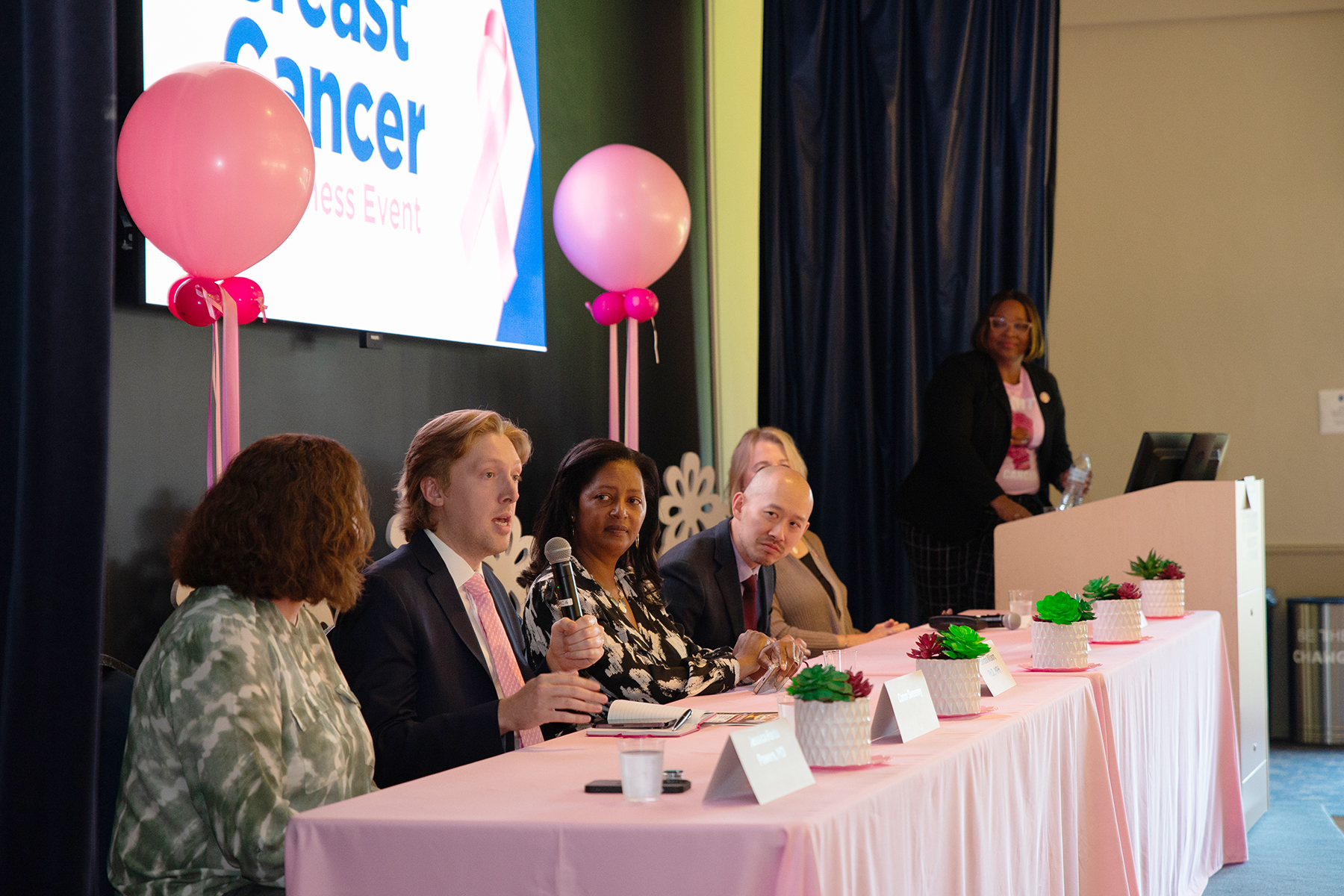
In recognition of Breast Cancer Awareness Month, Touro University California brought together healthcare experts, advocates, community organizations, and Solano County residents for its inaugural Breast Cancer Awareness Event, presented in partnership with Assemblywoman Lori D. Wilson. Held at TUC's Farragut Inn on Mare Island, the event welcomed more than 100 attendees for a community-centered conversation about early detection, treatment, and the support systems that help individuals and families affected by breast cancer.
The educational panel featured healthcare professionals and advocates representing organizations throughout the region, including Jeannie Hamann, co-founder of the Tim and Jeannie Hamann Foundation; Jessica Faith Powers, MD, of NorthBay Health; Conor Sweeney, Regional Manager of State Policy and Advocacy at Susan G. Komen; Deirdra Wilson, PhD, MPH, Associate Professor of Public Health at Touro University California; and Michael Zhang, MD, PhD, of Sutter Health.
Moderated by Assemblywoman Wilson, the panel brought together perspectives from medicine, public health, policy, and community advocacy. While each panelist approached breast cancer through a different lens, a common theme emerged throughout the discussion: early detection saves lives.
Early Detection, More Treatment Options
“By detecting it early, at the earliest possible signs of changes on a mammogram, we have a better chance of curing cancer. Not only curing cancer, but often using less treatment to achieve that cure,” Dr. Powers said.
Dr. Zhang expanded on that point. “A critical piece of the advancement is really understanding what the particular patient’s breast cancer is and tailoring that treatment for that patient,” he said. “It’s moving in both directions: intensifying treatment for more aggressive breast cancer and decreasing treatment for less aggressive breast cancer.”
Dr. Powers further connected personalized care with the benefits of early detection.
“Most women with breast cancer, if found early, do not end up needing chemotherapy at all,” Dr. Powers said. “Echoing what Dr. Zhang said, the ability to individualize and personalize cancer treatment eliminates the need for super-aggressive therapies like chemotherapy.”
Connecting the Community with Local Resources
The panel’s message also reinforced the broader purpose of the event: ensuring that more people have the information, resources, and community support they need to seek screening. By connecting residents with healthcare providers and local organizations, events like this can help bridge the gap between understanding the importance of early detection and being able to act on it.
Organizations at the event included Kaiser Permanente, Sutter Health, NorthBay Health, Tim and Jeannie Hamann Foundation, Solano Public Health, Camp Kesem, the Midnight Sun Breast Cancer Foundation, Cancer Support Community San Francisco Bay Area, Partnership HealthPlan of California, and Bay Area Cancer Connections.
Sweeney also highlighted the "Every Woman Counts" Program as a screening resource for eligible uninsured and underinsured Californians.
"Collaborating with community-based organizations who have those relationships and established connections with people in the community is very important," Dr. Wilson noted. "That's the difference between someone making an appointment and not."
While Dr. Wilson highlighted the role of community partnerships in improving access to screenings, Hamann offered a firsthand perspective on the support patients may need after diagnosis. A breast cancer survivor, she helped establish the foundation to provide practical and financial assistance to individuals undergoing treatment.
“Our foundation got started because it’s the working people who need help,” Hamann said. “There’s no savings to get through a year of treatment, so we’re there to help them with their house payment and their rent.”
Together, these perspectives underscored the importance of connecting people with support at every stage. By bringing trusted organizations and resources directly to the community, the event helped turn awareness into meaningful support and action.
Moving Forward Together
Looking ahead, Assemblywoman Wilson expressed her commitment to continuing the event and expanding its reach in the years ahead. She encouraged attendees to share what they learned with family, friends, and neighbors, helping extend the event’s impact throughout the community.
“I hope everyone here will take something they learned today and share it with others in the community,” Assemblywoman Wilson said. “We are committed to coming back, and next time, I hope everyone brings a friend so we can continue increasing awareness. Breast cancer is curable when caught early. Early detection is key, and I hope people leave feeling encouraged, whether they are survivors, currently undergoing treatment, supporting a loved one, or on the other side of their journey. There is hope for a brighter tomorrow.”